
All photos courtesy of Amanda Yu-Nguyen, unless otherwise noted.
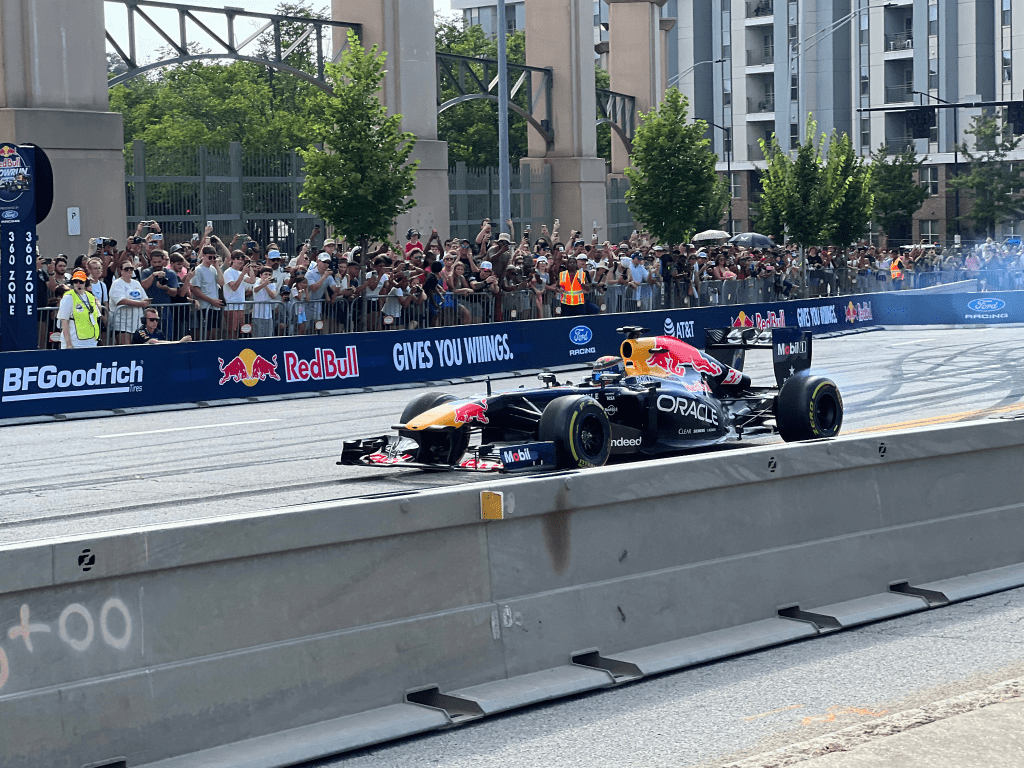
When I first heard that Red Bull was hosting a showrun in Atlanta, I was intrigued. The flyer said the event would be held in Summerhill, with cars running down Hank Aaron Drive. Summerhill is a neighborhood with a lot of history. Fulton County Stadium went up there in 1965, and Turner Field followed in 1997, built for the Olympics and then handed to the Atlanta Braves. Both are gone now, and the neighborhood around them spent decades absorbing the various changes in the form of bulldozed blocks, cut-off streets, and a community asked to host the spectacle without always sharing in it. So when Oracle Red Bull Racing (Ford Racing) and Visa Cash App Racing Bulls closed off Hank Aaron Drive and Fulton Street for an afternoon, I found myself thinking less about the cars and more about the ground they were standing on.
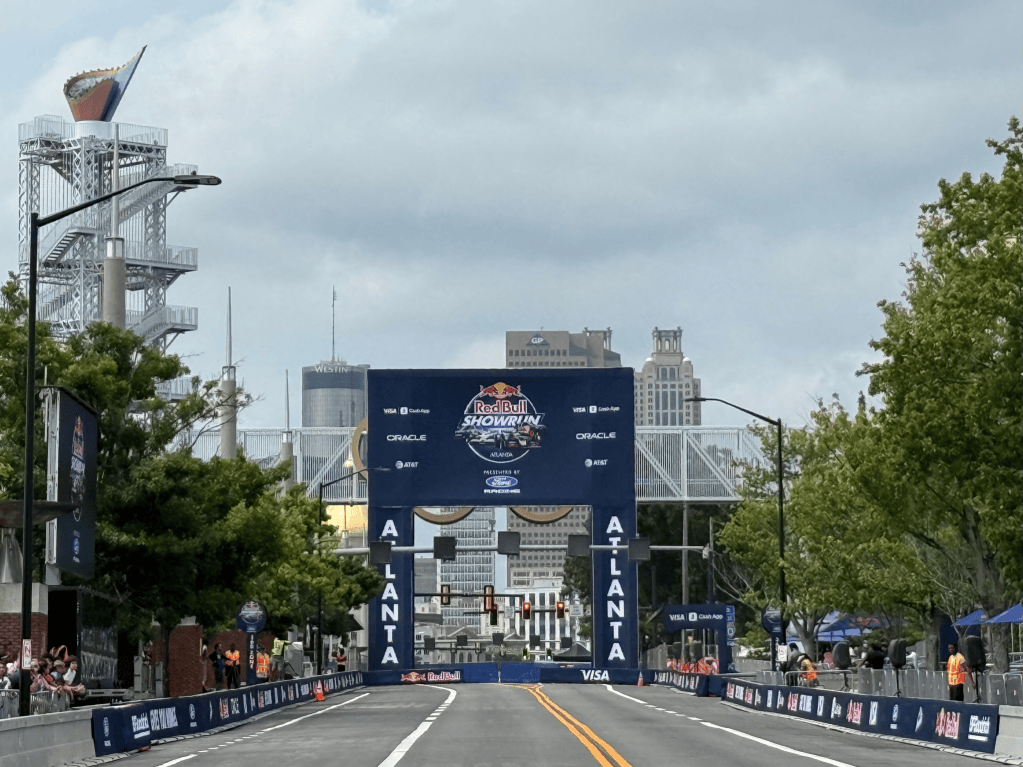
Formula 1 does not usually go where I went on Saturday. Summerhill is a historically Black neighborhood that has spent its recent years being used as a backdrop for other people’s big events. I don’t think the Showrun organizers were making a statement by routing the burnouts past those particular blocks. But the ground remembers things that planners may not, and I kept catching myself asking whether this counted as arrival or as one more version of the same old visit.
Here is what was different, though. The Showrun was free. You could walk from MARTA or off your own porch and watch a Formula 1 car do donuts less than fifty feet away. Formula 1 can sometimes feel like they’re building walls around who gets close, and for one Saturday afternoon in Atlanta, there was no wall.
Photography by Vivian Yu.
Does removing the price tag actually change who shows up, or does it just bring the existing fanbase a little closer to home? I think about this a lot with In Racing Color. Representation on the grid matters, but so does who gets to stand at the fence and imagine themselves there. A free street event does not fix the sport’s cost or access problems. It does, however, offer us a glimpse into what an afternoon with a different structure might look like.
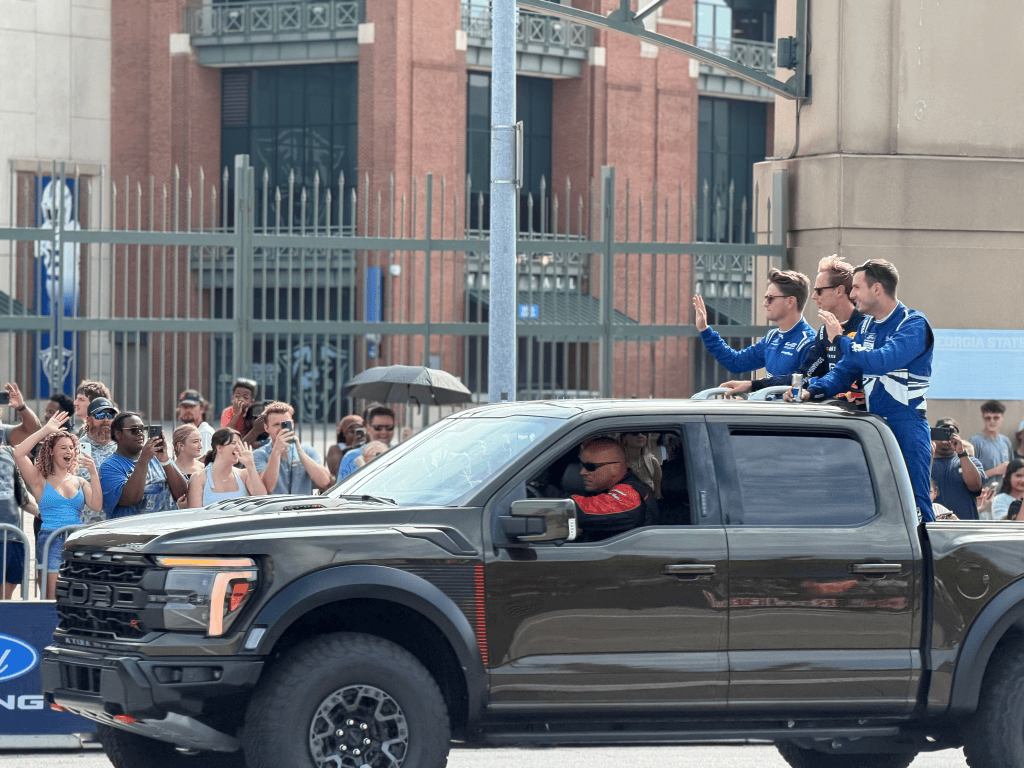
And from where I was standing, it looked like this. Families in lawn chairs next to a group of teenagers filming for TikTok. Kids on shoulders. More Aston Martin gear than I expected to see. Vintage gear on fans who have been around a lot longer than I have. I saw more racial, generational, and physical range in that crowd than I have seen at most motorsport events I have attended. It was exciting.
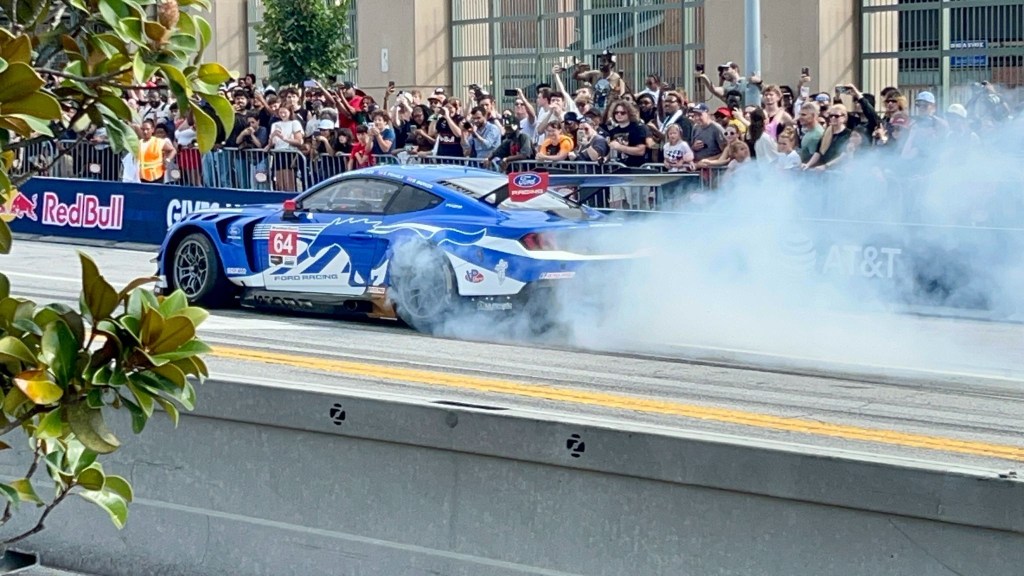
The event itself was fun. The drivers received cheers. The cars and bikes went fast. The neighborhood is still the neighborhood, with its own history that a one-day event does not resolve either way. But I left Summerhill thinking that access is not just about who is allowed on the grid. It is also about who is allowed to stand close enough to the action.
What would it take for that Saturday afternoon crowd to become a Sunday grandstand crowd? I don’t know. But I am glad I saw the Showrun, and I am glad it was in Summerhill.
Some stories don’t come from a press release. They come from being in the room, at the track, in the stands. Field Notes is my firsthand account of motorsport as I live and experience it.
— Amanda


Leave a comment