
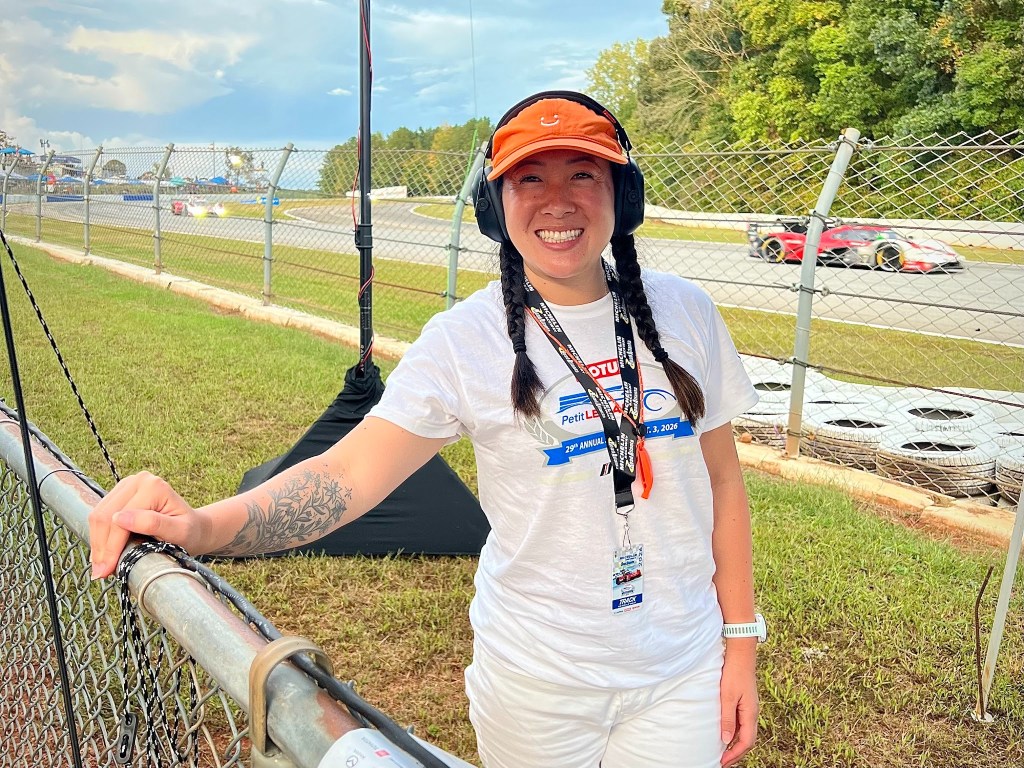
All photos courtesy of Amanda Yu-Nguyen.
At 7:30 on a Saturday morning in October, a room full of people holding their first cup of coffee noticed that I was new.
Nobody had to. It was early, the day was long, and the marshals’ meeting at Petit Le Mans was a working meeting, not a social hour. Still, one person after another introduced themselves and welcomed me to the marshalling world. I had recently joined the SCCA in August and finished the online Flagging and Communications course, and this was my first time seeing the work in real life at Road Atlanta. I walked in hoping to observe and learn. I did not expect to be greeted by name before the meeting was finished.
I want to hold onto that welcome, because it was genuine. I also want to be honest about the rest of what I noticed in that room.
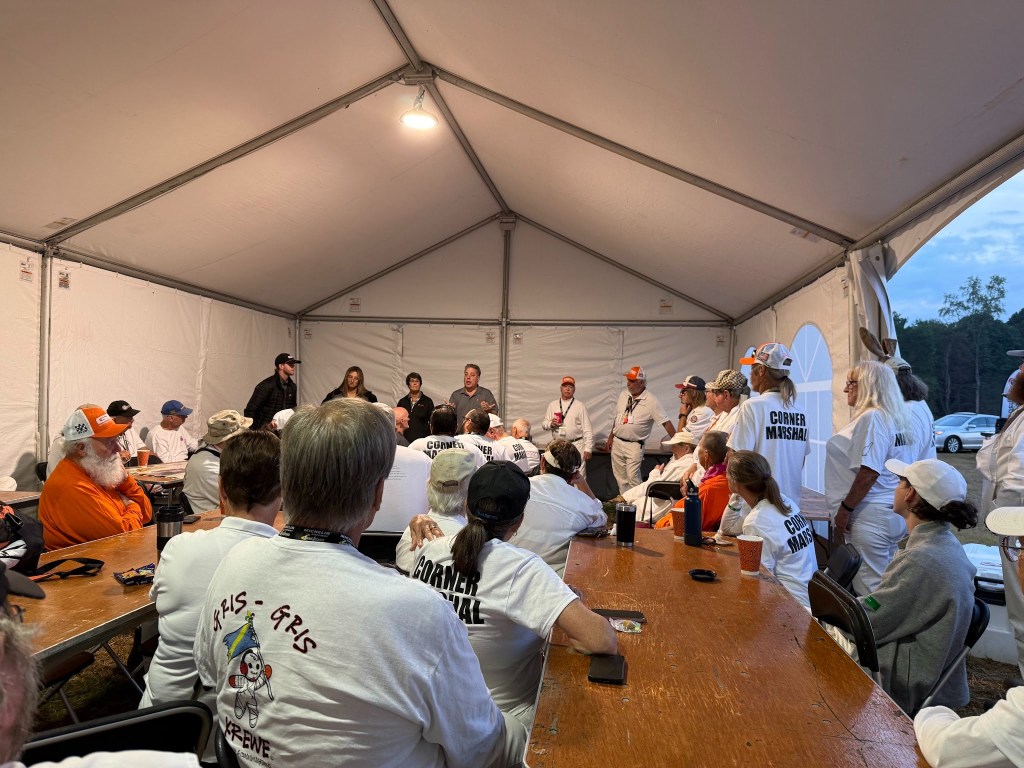
Most of the marshals were older white gentlemen. There were a handful of women, and even fewer women of color. I did not see many people who looked like me, and I was welcomed anyway. Both of those things were true at once, and I have been thinking about how they fit together.
Warmth matters, and it’s the reason I felt comfortable enough to ask questions and stay curious that day. But being welcomed into a space is different from seeing yourself reflected in it. A welcome depends on the people already there choosing to be kind. Representation means the space was built with room for you in the first place. I am excited to be one of the first, but I would like more people to become the second, third, and so on.
That is the theme at the center of In Racing Color. Diverse people have always been part of motorsport, but their stories are rarely the ones that get told. At a track, that is easy to miss, because the people who keep the sport running are mostly out of frame.
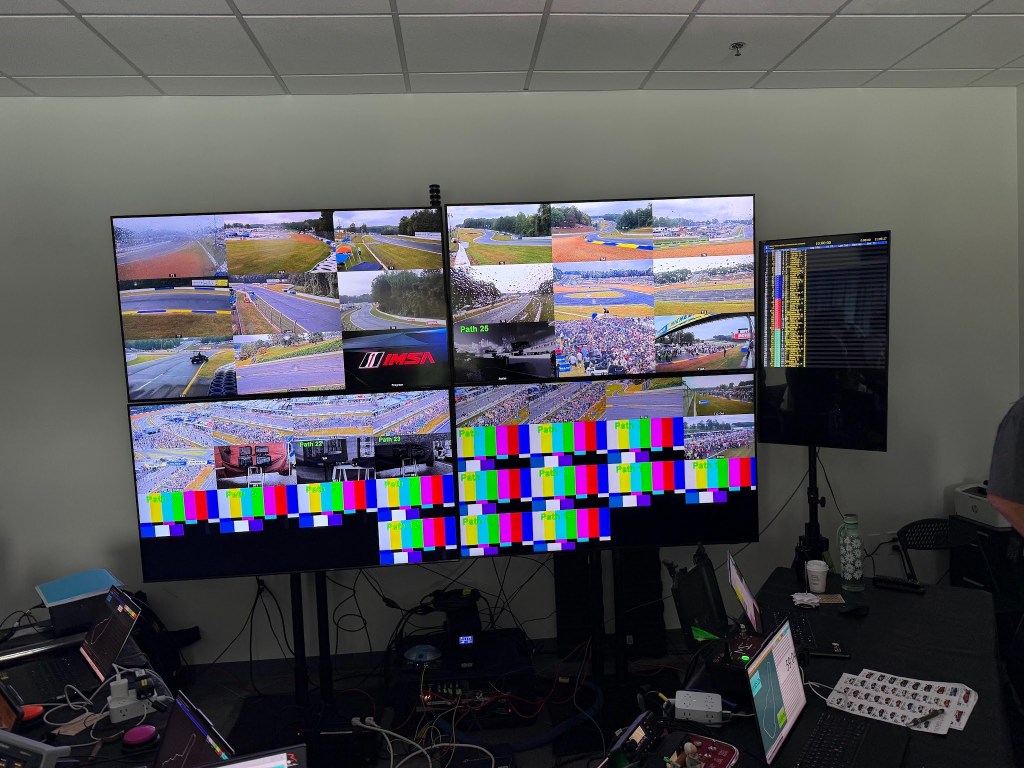
After the meeting, we went up to the tower to see the IMSA control room, where screens show every turn of the course. The officials told us how much they rely on marshals radioing in what they see. Cameras cannot catch everything. Human eyes can.
I kept thinking about that line during the race. Marshals are among the most important people at any track, and most spectators will never notice them. They are in the background of every broadcast. Their work is only visible when something goes wrong, and by then it is already urgent.
That is a familiar pattern. Many of the people IRC highlights, whether photographers, engineers, or the family members who made a career possible, do essential work that does not get a spotlight. Being essential and being seen are not the same thing. Part of this publication’s job is to close the gap between them.
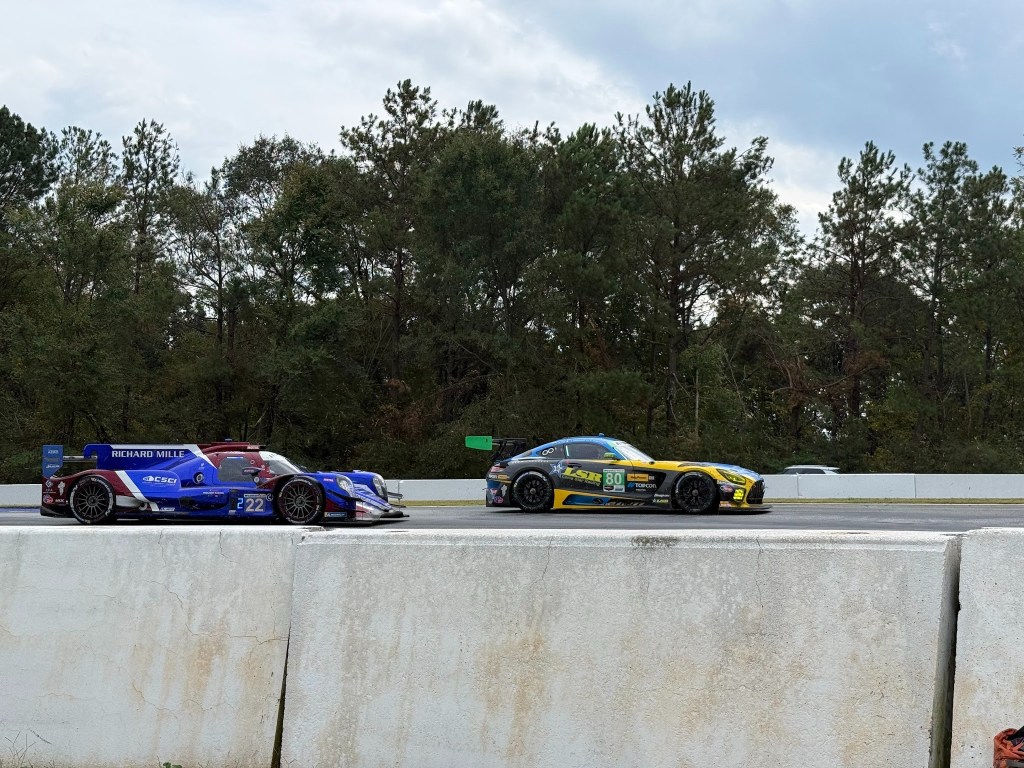
Once I got to my stations, the rest of the day was a crash course in attention. I started at turns six and seven. (Yes, the joke was made. Several times.) We were greeted by a downpour before the race, and I loved it anyway.
Each station runs on some sort of rotation: yellow flag, blue flag, comms, spotter, then a break. It is a ten-hour race, and nobody can stay sharp that long without sharing the load. Watching the groups work, I saw plenty of familiar group project dynamics, except everyone does their part and the stakes are real. When the cars went by on the first formation lap, just feet from me, I felt the engines in my chest. No grandstand seat had ever prepared me for that.
I spent the rest of the race at turn four, with a view of the esses at turn five. As the sun set, I tried a small test: could I read the numbers on the sides of the cars? It was much harder than it sounds. Flaggers do this all day, never distracted, always in their role, because the safety of the drivers and fellow marshals depends on it.
Seeing, it turns out, is a skill and a discipline. It takes training, focus, and a willingness to pay attention to what everyone else overlooks. This isn’t only true on a corner station. A sport that wants to see more of its people has to practice the same kind of looking.
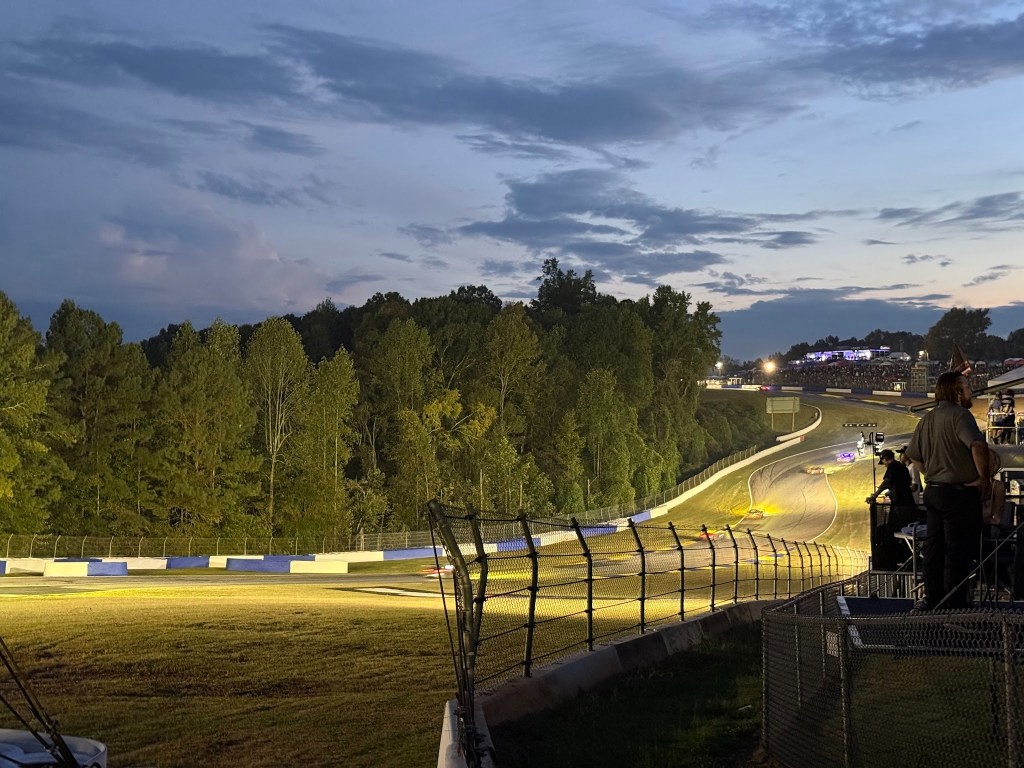
Now that I am inside the space, I can tell how it might look from outside. It could seem intimidating, and not obviously for you. A newcomer might wonder whether they belong, whether they know enough, whether anyone will talk to them. My experience was warm, but I also had enough nerve to walk in. Not everyone may have that.
So I keep returning to one question: how do we lower the barrier to entry for young people, for women, and for anyone who has never seen someone like them at a track? Maybe it is meeting the youth where they are, on social media. Maybe it is more stories like this one, told by the people living them. Maybe it is simply more of us showing up, so the next person sees a face they recognize.
I do not have the answer yet. I do know that the people who are welcoming now have more power than they realize. The first person who says hello at 7:30 in the morning might be the reason someone comes back.
Some stories don’t come from a press release. They come from being in the room, at the track, in the stands. Field Notes is my firsthand account of motorsport as I live and experience it.
— Amanda


Leave a Reply