

The following interview was conducted in writing. All photos courtesy of Melanie Otto.
Melanie Otto did not grow up around motorcycles. She grew up in Rhode Island with a camera in her hands, shooting macro leaves in the fall. Motocross was not part of her world. It was, by her own description, something she had seen in a Disney Channel movie.
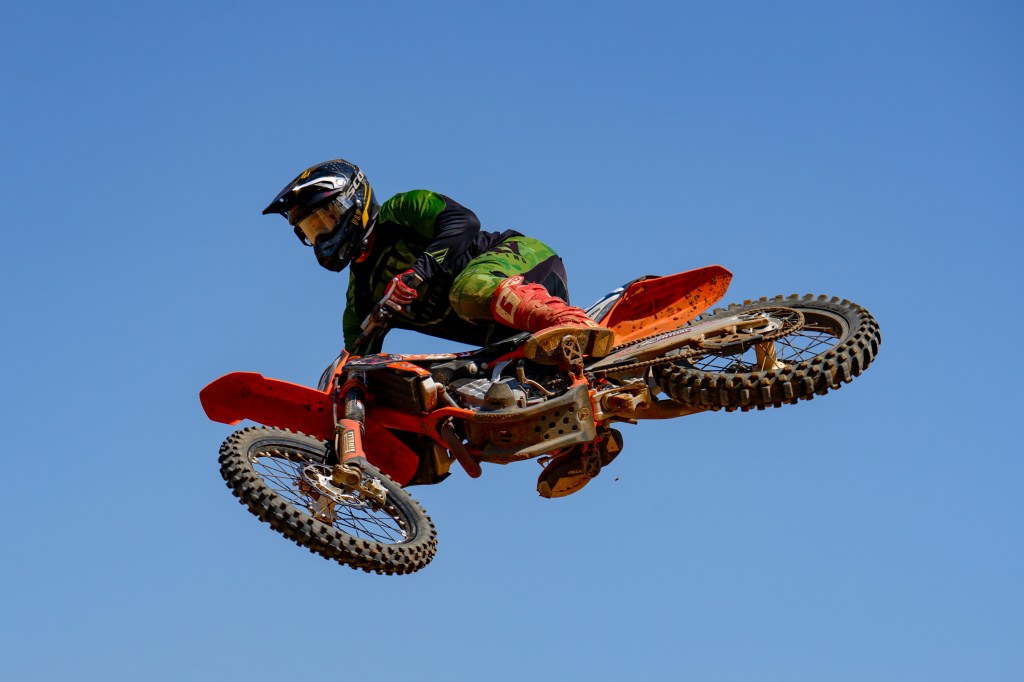
Then, in 2018, on a single desert riding trip she almost didn’t take, everything changed. She met her husband. She met the sport. And a year later, camera in hand and resistant at first, she captured a rider coming through a corner and froze the dirt flying off the back tire. The rush she felt in that moment was unlike anything she had experienced in photography before.
Melanie shoots motocross with the eye of someone who came to the sport as an outsider and stayed because she fell in love with its people. Her work finds the humanity of the sport: the eyes when the goggles come off, the parents changing oil at five in the morning, the kids running around after the track closes, just being kids.
This is her story.
Part One: Beginnings
IRC: How did you find motocross, and how did motocross find your camera?
Melanie: Growing up in the beautiful Ocean State of Rhode Island, my photography was always rooted in nature. I loved everything from macro shots of a single orange leaf in the fall to long-exposure images under lit bridges at two in the morning. My parents gave me my first camera when I was in early elementary school, and I honestly don’t remember a season of my life without one.
In 2018, God gave me my husband and motocross on the same day. Talk about a life-changing moment. Before that, I was the kind of girl you’d find on a tennis court or at the beach. Motocross, to me, was just something I’d seen in a Disney Channel movie growing up. But one day, I was invited to tag along on a desert riding trip. I went in just looking for an adventure, and I came out with my future husband and a sport that has shaped me into a better version of myself.
As a motocross family, my husband and I spent most weekends living in our camper at different tracks. In 2019, my husband kept encouraging me to bring my camera, and I resisted at first. It wasn’t what I knew, and doing something new with the camera I knew inside and out was very intimidating.
But the first time I brought it, I captured a rider coming through a corner. The shot froze the dirt flying off the back tire. In that moment, I felt a rush of excitement and joy in my chest I had never experienced in photography before. I was hooked.
IRC: What does a race day actually look like for you, from arrival to the last frame?
Melanie: In motocross, race day starts the night before. We roll into the track in the camper and unload everything: bikes, tents, gear, chairs, grills, camera gear, fire pits. Everything needed to live and race for the weekend.
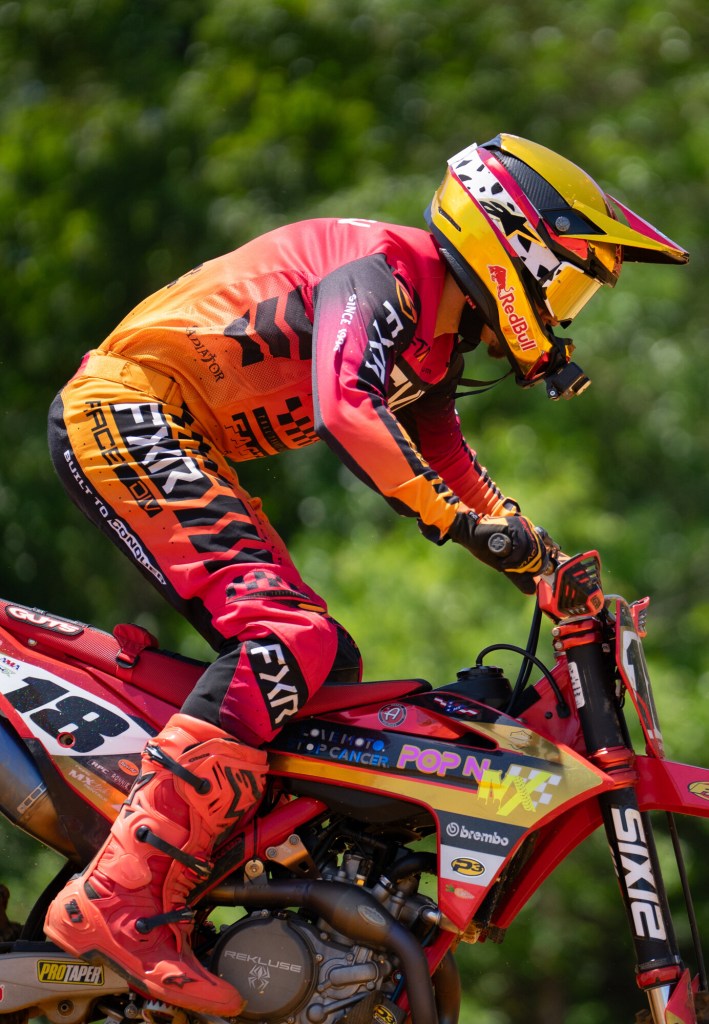
Race day morning usually begins with what we call “Church of Dirt” and prayer. After that, I spend most of the day moving around the track, constantly chasing the best angles and moments. Motocross tracks are incredibly dynamic. There are turns, jumps, whoops sections, sand sections, tabletops, start gates, finish lines, each offering something different to capture. And every track layout changes often, so no two race days are ever the same to capture.
Throughout the day, I’m tracking which classes are on the track, which riders I’m shooting, and sending select images to my phone for same-day social media content. In between it all, I’m swapping batteries, changing memory cards, laughing with people in the industry, and just genuinely enjoying being part of such an incredible environment.
Part Two: The World of Motocross
IRC: What do people on the outside consistently misunderstand or underestimate about motocross?
Melanie: One thing I wish more people understood about motocross is how inclusive it truly is. This is a sport for everyone. You don’t have to be a professional to participate, which means most fans of Monster Energy Supercross are riders themselves.
Whether you’re a toddler on a beginner bike, a teenager chasing podiums, a wife or girlfriend trying it for the first time, a seasoned A-class rider, or someone racing in the 60+ class, there’s a place for you. You’ll see people on brand-new bikes with top-of-the-line gear, and right next to them, someone riding a 10-year-old bike held together with duct tape. Both belong equally. Both are treated equally.
It’s one of the most welcoming and diverse communities I’ve ever experienced. People from all walks of life come together through a shared love of the sport, and that’s something really valuable.
IRC: Who are you watching when you’re not watching the bikes?
Melanie: When I’m not focused on the bikes, I’m watching the riders’ eyes.
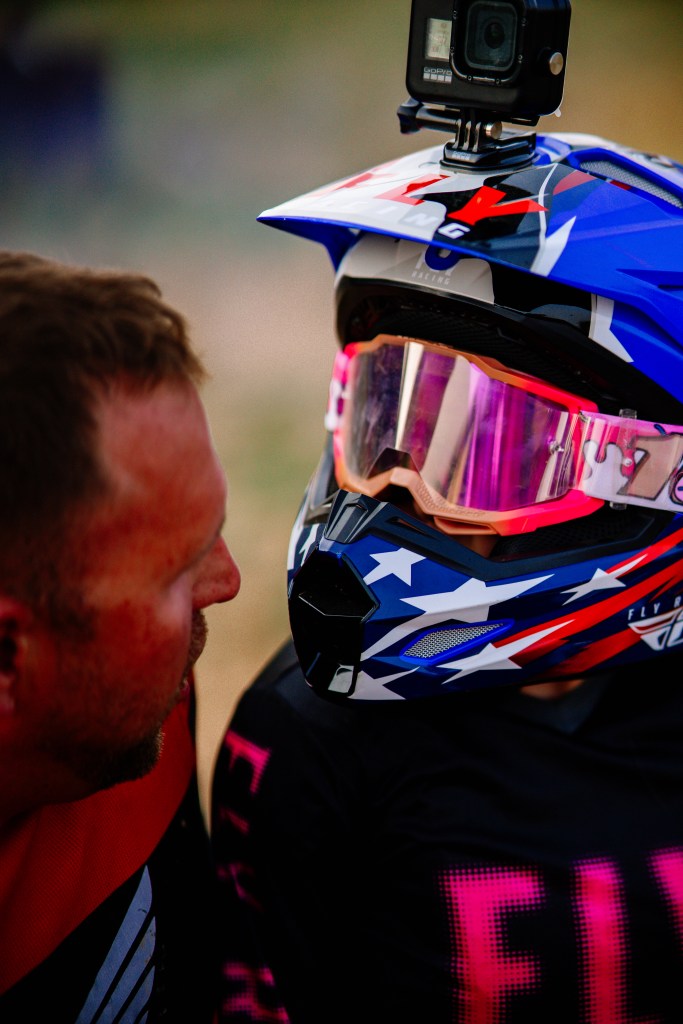
I love the moments when the goggles come off. Eyes tell a story if you take the time to notice. Beneath all the gear, it can be easy to forget that these riders are sons, daughters, parents, grandparents, teachers, soldiers, farmers, and friends.
I also love watching how riders interact with each other. Even though motocross is an individual sport, there’s a strong sense of community. Kids, teenagers, and adults spend their downtime laughing together, supporting each other, and genuinely enjoying the experience. That human connection is just as powerful to me as anything happening on the track. It happens at the starting gate, in the pits, at the award ceremonies, and even after the track closes for the day and the kids start running around just enjoying childhood.
IRC: Has spending so much time behind the lens changed how you watch motocross as a fan?
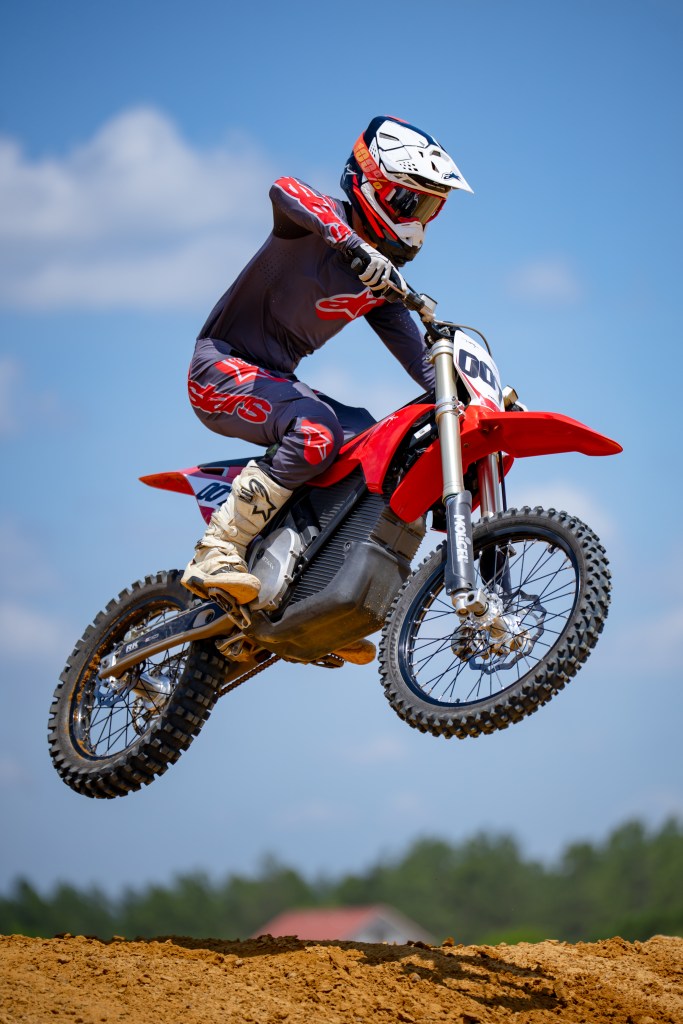
Melanie: Becoming a motocross photographer has completely changed how I watch the sport. It’s trained my eye to notice the small but powerful details: things like the subtle rotation of a rider’s leg through a turn or the way they adjust their line from one lap to the next.
The longer I’ve done this, the more I’ve been able to anticipate moments before they happen. In sports photography, you don’t react. You prepare or you miss the moment. You have to be ready before the moment unfolds.
This has gifted me a deeper appreciation for the skill and strategy behind every section on the track.
Part Three: Identity and Access
IRC: As someone working behind the camera in a sport that’s predominantly white and male, what has your experience been like on the access side of things? Do you feel like you belong in the spaces you’re shooting?
Melanie: I feel very blessed to say that I truly do feel a full sense of belonging in this industry.
While I haven’t yet had the opportunity to shoot Monster Energy Supercross, I know that is not because of a limitation placed on me, but as an opportunity that simply hasn’t come yet. If it turns out I don’t ever get that opportunity, no one could convince me that I was excluded due to being a female.
I cannot stress enough that this industry is full of incredible people. Coming from someone who was once completely outside of this world, I can honestly say it’s the most genuine and welcoming community I’ve ever experienced. Whether it’s your first time at a local track or you’re surrounded by the professionals, people treat you with the utmost kindness and respect.
You can have a conversation with a track owner or a pro-level rider like you’ve known them for years, and that says a lot about the culture of motocross. If you want inclusion, if you want a seat at the table, come to motocross.
IRC: Are there people in and around motocross who you feel are underrepresented in the images that get made, and that you’ve made it a point to seek out?
Melanie: I would say the most underrepresented people in motocross are the parents and the mechanics.
At the professional level, every rider has a mechanic who lives and breathes supporting them. They’re not just working on the bike. They’re the foundation behind the rider. They spend long stretches on the road, often away from their own families, dedicating their time and energy to keeping that rider performing at their best. From daily bike prep to trackside support and everything in between, their impact goes far beyond what most people see, and they deserve far more recognition.
At the amateur level, those roles are usually filled by Mom and Dad.
This isn’t a sport built around a single piece of equipment like a soccer ball or bat. It’s a full lifestyle commitment. If a child is at the track, it’s because their parents have worked all week to make it possible. They’re changing oil, fixing bikes, airing tires, buying new gear as their kids grow, loading and unloading trailers, washing gear, grocery shopping for race weekends, getting their child to the starting gate, and driving hours to and from the track, just to name a few things.
Those behind-the-scenes roles are just as important as what happens on the track, and they deserve to be seen. That’s something I make a point to capture whenever I can.
Part Four: The Work and What It Means
IRC: What’s the shot you haven’t quite gotten yet?
Melanie: One of my biggest goals is to photograph Monster Energy Supercross, but not for the title.
The environment there is joyful in the best way. It represents everything the sport stands for, from factory riders at the highest level to privateers living out of vans, chasing a chance to make the main event and earn their place.
There’s so much grit, sacrifice, and determination in that space. To be able to capture those stories, to document both the spotlight and the struggle, would be an incredible honor.
IRC: What do you want people to take away from your work beyond the fact that these athletes can do extraordinary things on a motorcycle?
Melanie: Motocross isn’t just a sport. It’s a way of life.
It’s not something you show up for a couple of times a week. It shapes your schedule, your physical fitness training, your family’s lifestyle, even where and how you spend your holidays. It becomes part of who you are.
But what’s beautiful about that is that it builds incredibly well-rounded people. It teaches discipline, resilience, work ethic, and will surround you with an incredible community.
Beyond the cool jumps, I want people to see the heart and dedication behind it all.
A Note From Amanda
I came into this interview knowing almost nothing about Melanie, except that she was a woman with a camera in a new-to-me sport.
Melanie came to motocross in an interesting way: sideways, through someone else, on a trip she almost didn’t take. She didn’t grow up in the sport. She wasn’t handed access or a credential or a connection. She showed up to a desert riding trip, fell in love, and eventually, reluctantly, brought her camera. And then she froze the dirt off the back tire of a stranger’s motorcycle and felt something she had never felt before.
This is an interview about finding your thing.
What I keep coming back to is what Melanie said about the goggles. That when they come off, the eyes tell a story. That beneath the gear, these riders are teachers and soldiers and grandparents and kids. She has trained herself to see that, and she has made it her mission to make sure her camera sees it too.
Melanie is photographing both the epic shots and the daily, behind-the-scenes shots, which truly make for powerful storytelling through the lens.
Melanie, thank you for sharing your world with us.
— Amanda
To see more of Melanie’s work, visit her website at melanieotto.com, browse her portfolio at ShootProof, or follow her on Instagram and Facebook at @braapandsnap.
In Racing Color publishes interviews, profiles, and essays about the people who make motorsport what it is, with a focus on the voices that have long been overlooked. If you’d like to be featured, collaborate, or simply follow along, you’re in the right place. Find us at @inracingcolor on Instagram and Threads.


Leave a comment