
In Racing Color’s first interview.
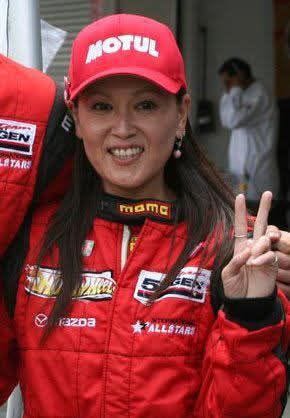
The following interview was conducted in writing. Hiromi Kajikuma Obata’s responses were originally written in Japanese and have been translated into English. Every effort has been made to preserve the personality and intent of her original words. All photos courtesy of Hiromi Kajikuma Obata.
In the early 2000s, at a time when drifting was still establishing itself as a serious competitive discipline and women in motorsport were an afterthought at best, Hiromi Kajikuma Obata was doing something nobody else had done. She shipped her personal pink AE86 from Japan to the United States to compete in Formula Drift. She became the first female driver to advance to the Top 16 at a Formula Drift event. She won the fan vote in Chicago. She had her car displayed at SEMA. And she did all of it before social media existed to amplify any of it, before there was a platform built to tell her story, before anyone thought to ask.
In Racing Color is asking now.
Hiromi lives in Kumagaya, Saitama, Japan, where she and her husband Kimihiro co-own Winds Auto, a JDM shop that is a testament to a life fully lived in the world of cars. She competes occasionally still, for the joy of it, not for the trophies. She judges drift competitions. And she received our questions with a generosity and warmth that set the tone for everything that follows.
This is our very first interview. We could not have asked for a better place to begin.

Part One: How It All Started
In Racing Color: How would you introduce yourself to people who might be meeting you for the very first time?
Hiromi: Nice to meet you all! My name is Hiromi. I was born in Japan, and I am Japanese.
I’ve loved cars since I was a child, and I used to watch F1 races on TV all the time. In Japan, you can get your driver’s license at age 18. I actually bought a car before I was old enough to get my license, and during the waiting period, I commissioned a full repaint and some custom work. The car was a Toyota Crown, which I styled as a dress-up car. So by the time I finally got my license, my finished Crown was already waiting for me at home. I immediately headed out for a drive with my friends. I’ll never forget the thrill of driving my own car through the city streets for the very first time. I remember feeling absolutely euphoric.
I first discovered drifting after I started dating my current husband. His name is Kimihiro Obata, and he is a motorcycle enthusiast who used to frequent circuits and mountain passes. I started tagging along whenever he went. When I saw racing and drifting in person at the track for the first time, I was filled with excitement and anticipation. I immediately felt an urge to try it myself, so I asked Kimihiro to prepare a car for me. The first time I went to the circuit to attempt a time attack, it was just so much fun. So incredibly fun. I was absolutely thrilled. The car he prepared for me was a Toyota Sprinter Trueno, an AE86. That marked my very first encounter with the AE86.
Kimihiro and his friends gradually began competing in drift tournaments, and hoping that one day I could too, I threw myself into practicing at the circuit with single-minded devotion. Little by little, I started to make a name for myself in the sport.
Around that time, Kimihiro became a D1GP driver. Shortly after, aiming to compete in Formula Drift USA myself, I traveled to the States for the qualifying trials and successfully secured my spot.
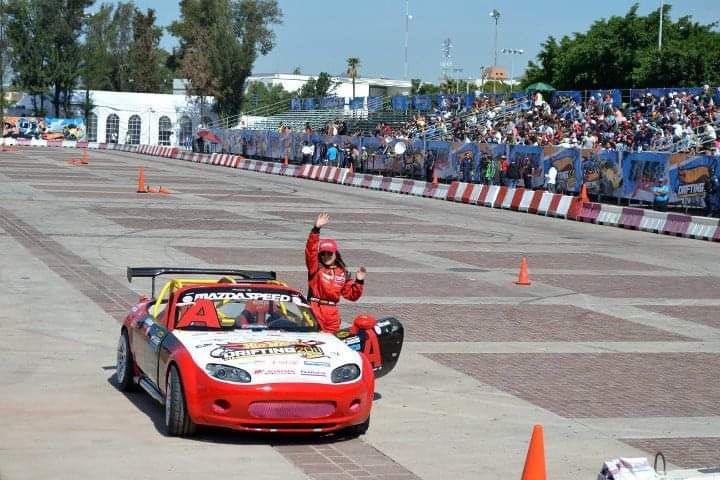
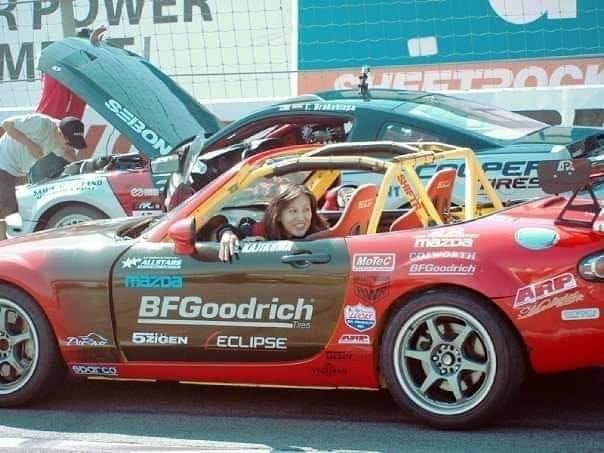
Representing Team KAAZ, a three-driver squad, I competed in Formula Drift USA for two years. In our first year, since the team’s car wasn’t ready in time, I had my personal pink AE86 shipped over from Japan. I competed in six rounds in that pink AE86. That inaugural year was truly historic: I won the fan vote at the Chicago round, became the first female driver ever to advance to the Top 16 at the Atlanta round, and had my pink AE86 displayed at the SEMA Show.
It was an era before social media was widespread, yet I received letters and words of encouragement from car enthusiasts and drifters all over the world. I take great pride in the fact that, through my passion for drifting, I was able to make friends and find kindred spirits across the globe. I am deeply grateful to everyone I met and everyone who played a part in my journey.
IRC: Drifting has a distinct culture compared to other forms of motorsport. For someone who has never been to a drift event, how would you describe the feeling of being in that world?
Hiromi: I believe that regardless of whether it involves drifting or any other pursuit, taking that very first step into a new world always requires courage. However, if it is something you truly love, even if you encounter difficult or sorrowful moments along the way, the belief that glory awaits you ahead gives you the strength to persevere. Even when stepping into an unfamiliar world, if you approach it by drawing comparisons to the worlds you already understand, I think you will find that drifting, too, can be a truly enjoyable experience.
IRC: You competed in Formula Drift in the United States, while Kimihiro competed in D1 Grand Prix in Japan. What did navigating those two worlds teach you?
Hiromi: I had the wonderful opportunity to experience the sport from two very different perspectives: as a competitor in Formula Drift, and as a supporter in D1GP. I came to realize that everyone, not just the drivers but also the support staff and the fans, forms a single, unified team. I also hold deep respect and gratitude for the organizers who work tirelessly to run these events, and for the sponsors whose support makes them possible.
The most important lesson I learned is this: whenever you set out to achieve something significant, you are never doing it alone. You are supported every step of the way by your friends, your family, and your fans.
IRC: What does it mean to share this life and this sport with a partner who understands it from the inside?
Hiromi: I believe it is a rare privilege. It was precisely because it was Kimihiro that he wholeheartedly supported my journey as a woman venturing out into the global drifting scene, constantly giving me the push I needed to move forward. I truly cannot thank him enough.
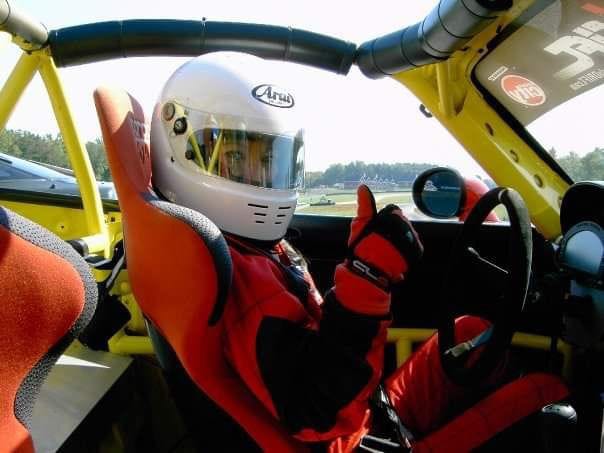
Whenever his schedule allowed, Kimihiro would travel to the U.S. with me to serve as my drifting spotter. Both of us retired from competitive drifting about 15 years ago. Nowadays, rather than trying to relive the past and compete fiercely, we simply focus on enjoying the sport. We head out to the circuit occasionally just to drift for fun.
Part Two: Being a Woman in Drifting
IRC: When you first began competing seriously, what was the reception like?
Hiromi: All of my fellow drifters supported me wholeheartedly. Kimihiro, in particular, was always there to give me a push whenever I started to feel discouraged or lose confidence.
As for my immediate family, since drifting is a hobby that goes hand-in-hand with danger, their reaction was complex: on one hand, they felt an urge to object due to the risks involved; yet, on the other, they felt a strong desire to support me. As time went on and they saw me making my mark on the global stage, my family eventually came to feel a deep sense of pride in my accomplishments.
IRC: There is often an unspoken pressure on women in motorsport to prove themselves in ways men simply don’t face. Did you ever feel that pressure?
Hiromi: While there may be differences between men and women in any competitive sport, I always shared the circuit with my husband. So I approached drifting with the mindset that, with enough effort, I might actually be able to beat him. Because of that, I never really harbored any hang-ups regarding gender.
I certainly felt pressure constantly. After all, I wasn’t competing solely for my own sake. I was participating alongside my fans and the sport’s stakeholders, all of us striving together to achieve results. In that sense, I actually viewed that pressure as a positive force. Rather than thinking in terms of “overcoming” pressure, I felt that as long as one remains a competitive athlete, bearing that pressure is actually an essential part of the journey.
IRC: You are known as the “Drift Queen.” How do you feel about that title?
Hiromi: I have absolutely no objection to being called the Drift Queen, though I suppose these days I’ve become more of an ex-Queen!
The experiences, records, and memories I created were achievements that no other woman had managed to accomplish at the time. For that reason, I do genuinely consider myself to be the original Drift Queen. That said, I’m a bit old-school and not very adept at navigating modern social media platforms. It’s a bit of a shame that I’m unable to engage in the kind of activities that today’s influencers do. However, even without doing all that, there are still people who recognize and appreciate me for who I am. And I’m perfectly content with that.
IRC: Looking at the drifting world today compared to when you started, what has genuinely changed?
Hiromi: Unlike in the past, the environment surrounding drifting today, both in terms of the tracks and the cars themselves, is incredibly well-developed. Vehicle performance has improved significantly, and the level of technical skill has risen right alongside it. I truly believe the sport is heading in a very positive direction. To everyone who is drifting right now, and to everyone who will take up drifting in the future, I sincerely hope you enjoy it to the absolute fullest.
Part Three: Community, Connection, and What Comes After
IRC: When you think about the young women stepping into drifting now, what do you hope they take from seeing you?
Hiromi: Remaining a competitive athlete at the very top of your field for an entire lifetime is an incredibly demanding endeavor. Amidst that challenge, I hope they remember to live their lives fully as individuals: adapting their approach, shifting their mindset, and re-evaluating their perspective to suit the specific place, time, and environment they find themselves in. I hope they avoid pushing themselves beyond their limits, and instead strive to live each stage of their life in a healthy and wholesome way, always cherishing their family and their fellow companions.
IRC: Community clearly matters deeply to you. What has the drifting community given you over the years?
Hiromi: It has brought me memories, a richness of spirit, and a constant opportunity to reflect, not only on the present but also on the path that lies ahead in my life.
IRC: You have competed and judged across Japan, Southeast Asia, and the United States. What does it feel like to watch drifting connect people across such different cultures?
Hiromi: People around the world are born into vastly different environments and hold vastly different perspectives. Yet, precisely because I have had the privilege of spending time with people from all corners of the globe, I have gained a unique outlook on life, one that encompasses learning, receiving, and giving back, in a way that the average person might not typically have the opportunity to experience.
Part Four: Looking Back, Looking Forward
IRC: What moment in your career are you most proud of?
Hiromi: If we’re talking strictly about competitive results, it would be the first time I advanced to the Top 16, or the time I won the Fan Vote.
However, above all else, what makes me proudest is the human connection: the countless people who have reached out to me, offered their support, and, as is happening right now, requested interviews or features. I take immense pride in the vast network of connections I’ve built and, most importantly, in the wonderful people I’ve had the privilege of meeting along the way.
IRC: If you could go back and say one thing to your younger self just starting out, what would it be?
Hiromi: “If you had learned to speak English, your drifting career might have turned out even better than it has!” Or so I’d like to tell myself! (laughs)
(A note: Hiromi conducted this entire interview in Japanese, trusting us with the translation. We are honored by that trust.)
IRC: For a young woman, or anyone who feels like they don’t quite fit the mold of what a motorsport person is supposed to look like, what would you want them to know about building a life in this sport?
Hiromi: I believe that if you can cultivate a sense of gratitude toward others, you will succeed, both as an athlete and as a human being.
A Note From Amanda
I started In Racing Color because I kept noticing the stories that weren’t being told. Hiromi Kajikuma Obata is exactly the kind of story I had in mind.
She was already there. She was already doing the work, already breaking barriers, already building community across continents, long before there was infrastructure in place to document any of it. She shipped her pink AE86 to America before most people had heard of Formula Drift. She became the first woman to reach the Top 16 without a publicist, without a platform, without anyone writing the feature that might have told the world what she had done.
What strikes me most about Hiromi is not the records, though they are remarkable. It is her gratitude. Her answers return to this theme again and again, showing gratitude for her husband, for her community, for the fans who wrote her letters from across the world before the internet made that easy. She competed not just for herself but for everyone alongside her, and she carries that mindset into everything she does.
She led the way for every woman who has since stepped onto a drift course and believed it was possible. Many of them may not know her name. But they are standing on ground she helped prepare.
Hiromi, thank you for the interview and for the trust.
— Amanda
In Racing Color publishes interviews, profiles, and essays about the people who make motorsport what it is, with a focus on the voices that have long been overlooked. If you’d like to be featured, collaborate, or simply follow along, you’re in the right place. Find us at @inracingcolor on Instagram and Threads.
Discover more from In Racing Color
Subscribe to get the latest posts sent to your email.


Leave a comment